Work-Life Balance: Real Strategies That Actually Help sets the stage for a journey into effective techniques and practical tips to harmonize work and personal life seamlessly.
Exploring the essence of work-life balance and its impact on overall well-being is just the beginning of this insightful discussion.
Understanding Work-Life Balance
Work-life balance refers to the equilibrium between personal life and professional life, where individuals are able to effectively manage their responsibilities in both areas without feeling overwhelmed or stressed. It involves prioritizing tasks, setting boundaries, and allocating time and energy to various aspects of life.
Examples of Achieving Work-Life Balance
- Setting specific work hours and sticking to them, avoiding overtime whenever possible.
- Scheduling regular breaks throughout the workday to recharge and avoid burnout.
- Engaging in hobbies and activities outside of work to relax and unwind.
- Communicating openly with employers or colleagues about workload and expectations.
Importance of Work-Life Balance for Well-Being
Maintaining a healthy work-life balance is crucial for overall well-being as it helps reduce stress, prevent burnout, and improve mental health. It allows individuals to have time for self-care, relationships, and personal interests, leading to increased productivity and job satisfaction.
Strategies for Achieving Work-Life Balance
Achieving work-life balance is crucial for overall well-being and productivity. By implementing effective strategies, individuals can create a harmonious blend between their professional and personal lives.
Setting Boundaries between Work and Personal Life
Maintaining clear boundaries between work and personal life is essential for achieving work-life balance. It is important to establish designated work hours and stick to them, avoiding the temptation to continue working outside of these hours. By creating a physical separation between work and personal spaces, individuals can better focus on each aspect of their lives without unnecessary overlap.
Time Management
Effective time management is key to achieving work-life balance. Prioritizing tasks, setting realistic deadlines, and avoiding procrastination can help individuals make the most of their time. By creating a schedule that allocates time for work, family, self-care, and leisure activities, individuals can ensure that each aspect of their life receives the attention it deserves.
Implementing Realistic Work-Life Balance Techniques
Creating a healthy work-life balance is essential for overall well-being. Here are some practical tips to help you integrate work-life balance techniques into your daily routine:
Flexibility in Work Arrangements
Flexibility in work arrangements can greatly enhance work-life balance. For example, negotiating flexible work hours or telecommuting options can help you better manage your time and responsibilities.
Role of Self-Care Practices
Self-care practices play a crucial role in maintaining a healthy work-life balance. Taking breaks, practicing mindfulness, exercising regularly, and setting boundaries are all important aspects of self-care that can help you recharge and avoid burnout.
Overcoming Challenges in Work-Life Balance
In the pursuit of work-life balance, individuals often face various challenges that can hinder their efforts to create a harmonious relationship between their professional and personal lives. These challenges can range from demanding work schedules to personal obligations, making it crucial to develop effective strategies to overcome them.
Identifying Common Challenges
- Work Overload: Many individuals struggle with managing heavy workloads and tight deadlines, leading to increased stress and difficulty in allocating time for personal activities.
- Lack of Boundaries: With the rise of remote work and technology, it can be challenging to establish clear boundaries between work and personal life, resulting in blurred lines and constant accessibility.
- Time Management: Balancing work responsibilities with personal commitments requires strong time management skills, which can be a significant challenge for individuals juggling multiple roles.
- Guilty Feelings: Some individuals may experience guilt when prioritizing personal time over work tasks or vice versa, leading to emotional strain and inner conflict.
Strategies for Overcoming Challenges
- Set Priorities: Clearly define your priorities and allocate time based on what matters most to you, ensuring a balance between work and personal life.
- Establish Boundaries: Create physical and mental boundaries between work and personal time, setting specific hours for work and leisure activities to maintain a healthy separation.
- Delegate and Outsource: Learn to delegate tasks at work and outsource personal responsibilities when necessary to lighten your workload and free up time for yourself.
- Practice Self-Care: Prioritize self-care activities such as exercise, meditation, and hobbies to recharge and rejuvenate, promoting overall well-being and reducing stress.
Impact of Technology and Remote Work
- Advantages: Technology and remote work offer flexibility and convenience, allowing individuals to work from anywhere and manage their schedules more efficiently.
- Disadvantages: However, the constant connectivity and reliance on technology can blur boundaries between work and personal life, leading to burnout and decreased productivity.
- Finding Balance: To overcome the challenges posed by technology and remote work, it is essential to establish clear boundaries, practice self-discipline, and prioritize mental health and well-being.
Wrap-Up
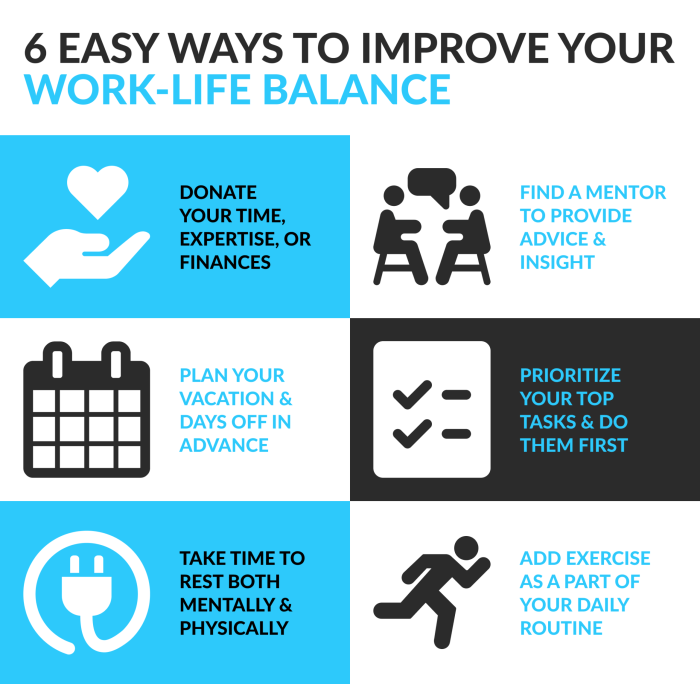
In conclusion, Work-Life Balance: Real Strategies That Actually Help encapsulates key insights and approaches to achieving a fulfilling balance between work and life. Dive into these strategies and transform the way you navigate your daily responsibilities.
Frequently Asked Questions
How can I effectively set boundaries between work and personal life?
To establish boundaries, create designated work hours, limit checking work emails outside those hours, and prioritize personal time without work distractions.
What are some practical tips for integrating work-life balance techniques into daily routines?
Start with time-blocking for work and personal activities, practice mindfulness to stay present in each moment, and prioritize tasks based on importance and deadlines.
How does flexibility in work arrangements contribute to enhancing work-life balance?
Flexible work arrangements allow individuals to adapt their work schedule to personal needs, fostering a better balance between professional responsibilities and personal well-being.
What impact does technology and remote work have on work-life balance?
Technology and remote work can blur the lines between work and personal life, leading to potential burnout. Setting clear boundaries and disconnecting when needed can mitigate these challenges.